

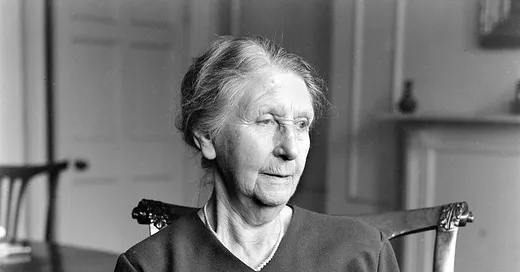
Because You Fail to Do History Justice.
✅ Checklist for Historical Series and Biopics: Be Cautious of Presentism
🎯 Goal: Ensure your characters and plot reflect the norms, beliefs, and limitations of their time—not ours.
Work through the checklist with your most recent project. Maybe you’re an actor preparing your next film. Maybe you’re a screenwriter delving into the past to write about it. How-ev-er… let’s make it authentic. Let’s not bend the truth about history. Let’s portray historical events as they truly were. (Or at least come as close as we can.)
Here’s a handy checklist for you to work through.
🕰 Understand the Values of the Era
☐ Identify dominant political, religious, and cultural ideologies of the time
☐ Study primary sources (letters, newspapers, sermons) to see how people actually spoke and thought
☐ Compare elite vs. popular attitudes (upper-class women often had different freedoms than working-class ones)
🧠 Think Like a Historian, Not a Judge
☐ Acknowledge that the past was not a trial run for the present
☐ Avoid labelling historical figures as ‘bad’ or ‘good’ by today’s standards
☐ Instead, ask: what would this person’s choices have meant to their peers at the time?
Want to learn how to turn historical research into playable choices? Get the actor checklist.
🗣 Match Voice to Worldview
☐ Does your character hold views that would be unusual or radical for their time? Justify it with backstory
☐ Avoid 21st-century vocabulary in dialogue (e.g. “self-care,” “toxic,” “gender reveal,” “trauma dump”)
☐ Let characters express values in the language and frameworks available to them in their era
🎭 Show Resistance Without Revision
☐ If your protagonist challenges societal norms (e.g. racism, sexism), show them doing it in a historically plausible way
☐ Ground radical thinking in real historical movements (e.g. abolitionism, suffrage, socialism). A great example was Enola Holmes 2.
☐ Show consequences—how would society realistically react to your character’s views?
Find this checklist useful? I also have an even better one: get it here.
🧩 Final Check
☐ Could your story still make sense if readers didn’t share your modern values?
☐ Have you read any counter-histories or controversial perspectives from the time?
☐ Would your characters recognise their world—or are they secretly 21st-century tourists?
Would your characters recognise their world… I really hope these questions help sharpen your vision, and help you write or prepare better so that your version of the past feels real.
Cheers from sunny Germany,
Barbara
Historian and historical consultant for actors and screenwriters.
Author of Preparing Historical Roles
Want To Write Fiction That Does History Justice?
Read the essay that started it all: https://withdrbarbara.com/prepare/
Subscribe below for bite-sized guides, checklists, and insights—so your characters don’t sound like time misplaced time travellers.